

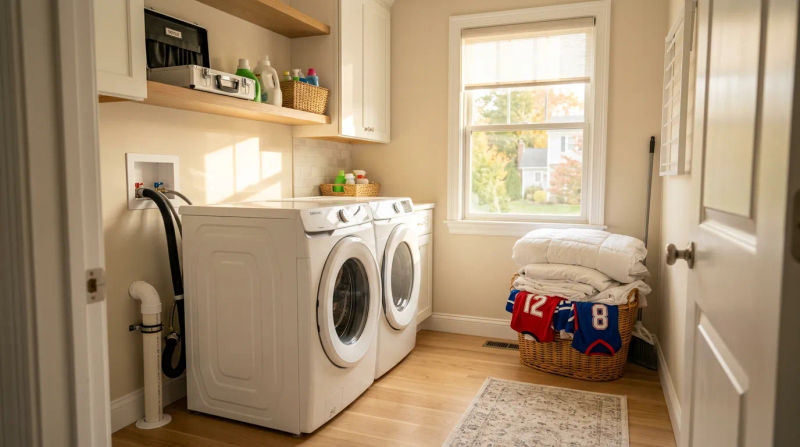
I’m Daniel Russo, a Senior Appliance Repair Technician here at Legacy Appliance Service, and with over a dozen years in the field, I’ve seen just about every appliance emergency you can imagine. But some calls have a special kind of urgency. That was the case a few weeks ago in September when we got a call from a homeowner in Fair Lawn, NJ. The back-to-school season was in full swing, sports uniforms were piling up, and their high-efficiency washing machine had decided to stop working at the worst possible time. It was sitting in their finished basement, full to the brim with murky, stagnant water.
For this family, it wasn't just about the inconvenience of laundromats. Their washer was in a beautifully finished basement in their large, 1990s-era home - a space used for family movie nights and kids' playdates. A tub full of water was a ticking time bomb, threatening to overflow and cause thousands of dollars in water damage to the flooring, drywall, and furniture. They needed a washer won’t drain repair, and they needed it fast. With the colder, wetter months on the horizon, the thought of a major water issue was particularly stressful. They called Legacy Appliance Service looking for a quick and reliable solution, and I was dispatched to their home that same afternoon.
The Assessment
When I arrived at the Fair Lawn home, the homeowner led me downstairs to the laundry area. The smell of stagnant water was faint but unmistakable. The washer, a modern front-loader, was indeed full. My first priority in a situation like this is always to contain the immediate threat. Before starting any diagnostics, I manually drained the machine using a gravity hose and a bucket. It’s a slow process, but it’s crucial for preventing a spill and allowing me to work safely.
With the drum empty, my diagnostic process could begin. At Legacy Appliance Service, we pride ourselves on being thorough. We don't just jump to conclusions. My assessment followed a careful, step-by-step procedure:
- Check for Simple Obstructions: I first disconnected the main drain hose from the wall standpipe to ensure there wasn't a simple clog in the home's plumbing. The pipe was clear. I then inspected the hose itself for kinks or blockages. It was also clear.
- Access the Pump Filter: Most modern washers have a small access door on the front for a debris filter or 'coin trap.' I opened it up and unscrewed the filter. A small amount of water drained out, along with a bit of lint and a stray sock - a common find, but not enough to cause a complete drainage failure. Cleaning this is good practice, but it wasn't the root cause.
- Run a Diagnostic Cycle: I put the washer into its service diagnostic mode. This allows the machine's internal computer to test individual components. When I initiated the 'Drain Pump' test, I could hear a faint electrical hum, but not the familiar whirring sound of the pump impeller spinning. The machine subsequently threw an error code indicating a drain system failure.
- Test the Pump Motor: This was the final confirmation. I carefully tilted the heavy machine back and secured it, giving me access to the components underneath. Using my multimeter, I tested the electrical terminals on the drain pump motor for continuity. The reading was open-circuit, meaning the electrical winding inside the motor had failed. The pump was dead.
This confirmed the need for a Fair Lawn basement drain pump replacement. The homeowner was relieved to have a definitive diagnosis. They were concerned that the problem was much larger, but I assured them this was a repair we handle frequently and that their foresight in calling us quickly had prevented any secondary damage to their home. This is why addressing a washing machine not draining before winter NJ weather arrives is so important.
Our Solution
With the problem identified, it was time to implement the solution. One of the core principles at Legacy Appliance Service is preparedness. My service vehicle is stocked with hundreds of common OEM (Original Equipment Manufacturer) parts, including the exact drain pump needed for this family's washing machine. This means in most cases, like this one, we can complete the repair in a single visit without waiting for parts to be ordered.
The process for the pump replacement was methodical:
- Safety First: I unplugged the washer from the wall outlet and turned off the water supply lines to ensure a safe working environment.
- Access and Removal: With the machine still tilted back, I had clear access to the pump assembly. I used a pair of pliers to release the spring clamps holding the inlet and outlet hoses to the old pump. I then disconnected the wire harness and unbolted the failed pump from the washer's base.
- Installation of the New Pump: I unpacked the new OEM drain pump and secured it into position. I made sure the rubber mounting grommets were seated correctly to prevent vibration noise. The hoses were reattached, and the spring clamps were carefully positioned for a watertight seal. Finally, I reconnected the electrical harness.
- Preventative Cleaning: While I had everything apart, I took the opportunity to inspect the hoses I had removed. I flushed them out to ensure no hidden debris was waiting to cause a future problem. This small, extra step is part of the comprehensive service we provide and is key to a long-lasting Legacy Appliance Service washer repair Fair Lawn residents can count on.
Once the new pump was fully installed, I carefully lowered the washer back to its level position. The entire replacement process took less than an hour. The final and most important step was to test the repair thoroughly.
The Results
The moment of truth arrived. I reconnected the power and water, then started a 'Rinse & Spin' cycle, which fills the tub with a significant amount of water before draining. We watched as the tub filled. Then, the cycle shifted, and the new drain pump kicked on. Instead of the silence and humming from before, there was a powerful, healthy whirring sound. We could see the water level in the drum drop rapidly as water was forcefully expelled through the drain hose.
Before: A washing machine full of stagnant, smelly water, posing a serious flood risk to a finished basement and bringing the family's routine to a halt.
After: A perfectly functioning washing machine, draining faster and quieter than it had in years. The immediate threat of water damage was gone, and the laundry pile-up could finally be tackled.
The homeowner was visibly relieved. Not only was their appliance working again, but the repair was completed in a single, efficient visit, just a few hours after they first called. They appreciated that I took the time to explain the problem, show them the failed part, and clean the filter area as a preventative measure. This is the peace of mind we strive to deliver on every job at Legacy Appliance Service.
By addressing the issue promptly, we ensured their home was secure before the onset of winter. A basement leak is a major headache anytime, but it’s a catastrophe when the ground is frozen and outdoor access is limited. They now have a reliable washer ready for holiday guest linens, bulky winter coats, and everything in between.
Ready for your own Legacy Appliance Service experience? Contact us today for a free inspection.