

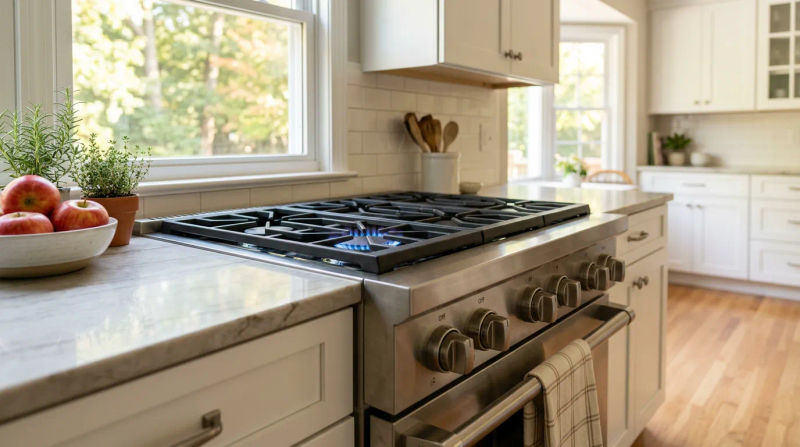
The first chill of September was in the air in Fair Lawn, a sure sign that the season of cozy, home-cooked meals was upon us. For one of our clients, Mrs. Peterson, this shift usually brought a sense of comfort. Her pre-1940s Tudor Revival home was the heart of her family's gatherings, and its kitchen, with a beautiful, robust gas range, was the command center. This year, however, a nagging problem was casting a shadow over her culinary plans. Her trusted gas range had developed a frustrating and worrying habit: the burners would click endlessly but refused to light. Sometimes, after a long delay, a burner would ignite with a startling whoosh, releasing a brief but unnerving smell of gas.
She knew that with the holidays on the horizon, a finicky stove was more than an inconvenience; it was a potential safety hazard and a roadblock to family traditions. She needed a reliable, expert solution, not a temporary fix. That’s when she called us at Legacy Appliance Service. As a senior technician, I’ve seen this exact scenario play out many times, especially as families gear up for more indoor cooking. A burner clicks but won’t light NJ repair is one of our most common calls in the fall, and I knew we could restore her peace of mind.
The Assessment
When I arrived at the beautiful Fair Lawn home, I was immediately struck by its character. The steep gables and decorative brickwork were classic hallmarks of the neighborhood's pre-war architecture. Inside, the kitchen featured a high-end gas range that, while a few years old, was clearly a quality appliance meant to last. It was the perfect centerpiece for such a timeless home, and replacing it would be a costly shame.
Mrs. Peterson demonstrated the problem for me. Just as she described, the burner knob produced a steady clicking from the spark module, but the burner remained stubbornly unlit. After about ten seconds, a faint odor of unburnt natural gas was noticeable. This is a red flag I take very seriously. The clicking sound confirms the spark is trying to do its job, but the gas isn't being released and ignited at the right time. This delayed ignition is what causes that startling whoosh and the gas smell - a small but uncontrolled accumulation of gas finally catching fire.
My experience immediately pointed to a weak surface igniter. To confirm my diagnosis, I began a systematic check. At Legacy Appliance Service, we don't guess; we test. I prepped my multimeter with an amp clamp to measure the electrical current the igniter was drawing. Here’s a bit of the science behind it:
- A gas range igniter is essentially a resistor. When you turn the knob, it heats up to an extreme temperature (over 1800°F).
- This intense heat serves two purposes: it ignites the gas, and, more importantly, it causes a safety valve to open by drawing a specific amount of electrical current (amperage).
- A healthy igniter needs to pull between 3.2 and 3.6 amps to open that valve quickly and safely.
I clamped my meter around the igniter’s wiring and turned the knob. The reading hovered around 2.7 amps - well below the required threshold. This weak draw was causing the safety valve to open slowly and erratically, leading to the delayed ignition and gas smell. The igniter, a part that endures thousands of heating and cooling cycles, had simply worn out. It was time for a Fair Lawn gas stove igniter replacement.
Our Solution
I explained the diagnosis to Mrs. Peterson, showing her the reading on my meter and explaining why it was causing the issue. A key part of the Legacy Appliance Service promise is transparency. We want our clients to understand the 'why' behind the repair. She was relieved to hear it was a common, repairable issue and not a sign that her entire range was failing.
Fortunately, this specific type of igniter is a part we keep stocked in our service vehicles for just this reason. Our goal is always to complete a Legacy Appliance Service gas range repair in Bergen County on the first visit whenever possible. With her approval, I got to work immediately.
My process for a gas range igniter repair is built on safety and precision:
- Safety First: Before any work begins, I shut off the gas supply valve behind the stove and unplugged the appliance from the electrical outlet. Working on a gas appliance requires the utmost caution.
- Disassembly: I carefully removed the heavy cast-iron grates, the burner caps, and the sealed burner heads. I then lifted the main cooktop, propping it securely to give me clear access to the burner assemblies and their wiring.
- Component Replacement: I located the faulty igniter and disconnected its ceramic wire nut connectors. After unmounting it, I held the old igniter next to the new, OEM (Original Equipment Manufacturer) replacement part. While there was no visible crack, the old one had a dull, chalky appearance compared to the vibrant new one - a subtle sign of its age and degradation. I secured the new igniter in place and carefully reconnected the wiring.
- Reassembly and Inspection: I meticulously reassembled the cooktop, ensuring every burner and cap was seated perfectly. A misaligned burner cap can cause poor ignition and an uneven flame, so this step is critical.
The entire replacement process took less than 30 minutes. It's a testament to how experience and having the right parts on hand can turn a major headache for a homeowner into a quick and painless solution.
The Results
The moment of truth arrived. I turned the gas supply back on, plugged the range in, and turned the knob for the repaired burner. The result was immediate and perfect. With a single, crisp click, the burner flashed to life with a full, steady, and beautifully blue flame. The frustrating delay and the unnerving gas smell were gone.
Before: Endless clicking, a 10-15 second delay, and a dangerous whoosh of ignition. After: Instantaneous ignition with a single click and a safe, controlled flame.
I tested the other burners to ensure everything was in perfect working order, which it was. I also took a moment to check the flame quality, making sure it was burning efficiently - mostly blue with just the slightest yellow tip. Mrs. Peterson was thrilled. She saw firsthand how a professional repair not only solved the problem but also restored the safety and reliability of her kitchen's most important appliance.
She was especially pleased that we were able to preserve her high-quality range, saving her the thousands of dollars and significant hassle that would have come with a full replacement. This is the value we strive to provide at Legacy Appliance Service. We’re not just parts-swappers; we’re problem-solvers dedicated to extending the life of your valuable appliances.
Ready for your own Legacy Appliance Service experience? Contact us today for a free inspection.